

December 16, 2025
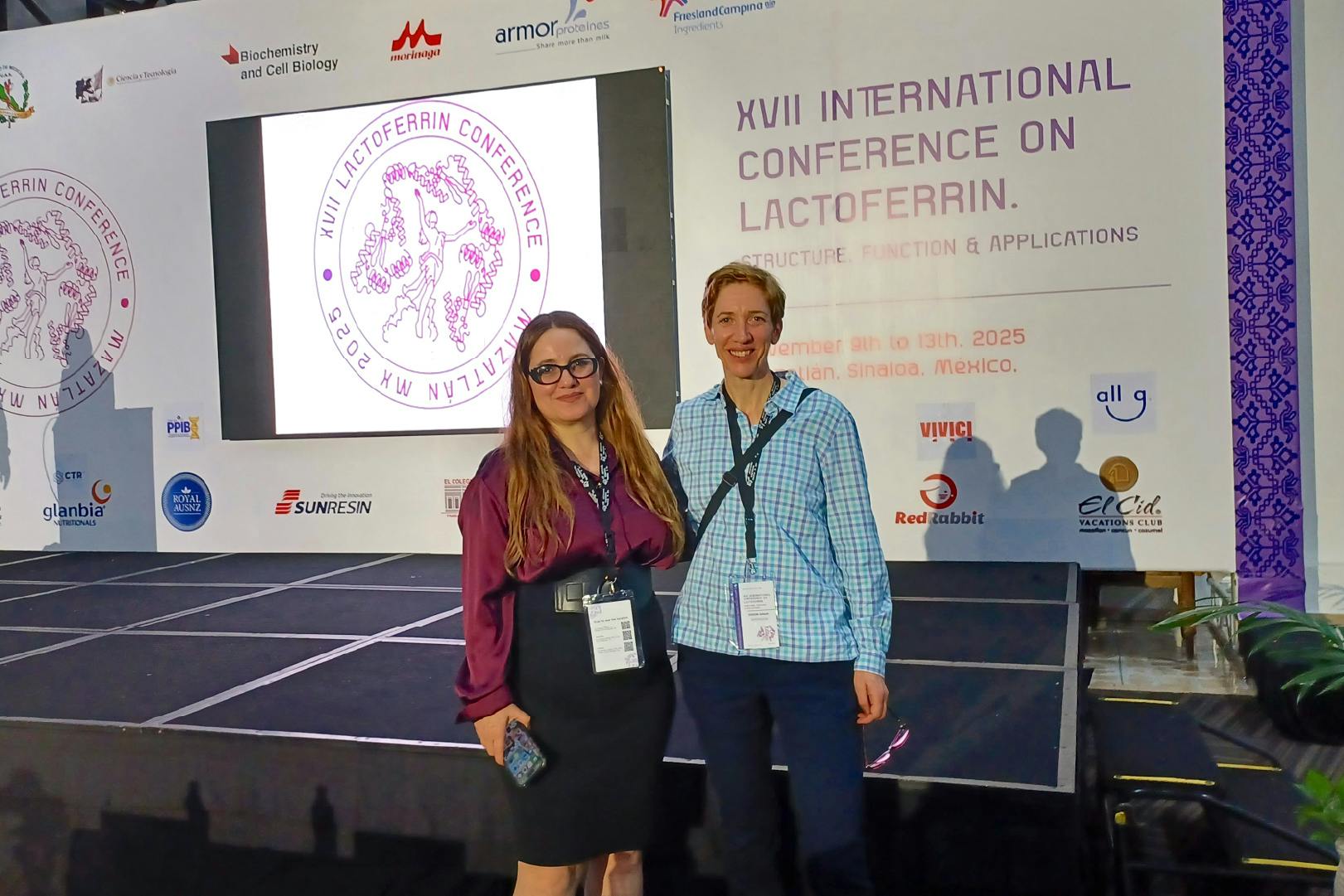
Dr Alison Dixon, Senior Nutrition Scientist, heard first-hand about these health benefits when she attended the recent conference where speakers discussed advances in lactoferrin (LF) research including against infectious diseases and immunomodulation, its role in nutrition and health, novel manufacturing processes and applications, and industry standards.
Some of the highlights included:
Lactoferrin for nutrition and infant health
Human breast milk contains a rich combination of carbohydrates, lipids and proteins that not only nourish infants but also help establish a healthy gut microbiome, protect against harmful bacteria, and support immune-system development. Several conference presentations highlighted lactoferrin, a key milk protein, for its role in reducing infection rates and supporting brain development – particularly in pre-term infants. Although lactoferrin supplementation shows promise for these high-risk babies, research is still under way to determine the most effective dosing.
Recombinant lactoferrin developments
Biotech start-ups DaisyLab, All-G and Helaina presented progress in producing bovine and human lactoferrin through precision fermentation – a technology that uses microbes, typically yeast, to create complex proteins. These developments may help lower production costs and expand the availability of lactoferrin for wider use. Studies demonstrating the structural similarity, safety and efficacy of recombinant lactoferrin were shared.
Academic groups also reported advances in recombinant lactoferrin applications. One study from Vasilyev Vadim (Institute of Experimental Medicine, Russia) showed that a low-iron form of human lactoferrin (apo-lactoferrin) exhibited promising antitumor activity, suggesting potential to complement existing cancer therapies by reducing side-effects and drug resistance.
Other work, presented by Sapsalyov Sergey (National Academy of Sciences of Belarus), described the development of a bioactive mixture of human lactoferrin and its peptides for potential use in skin-health products.
Novel clinical and therapeutic applications
Exploratory work on therapeutic applications was presented on anaemia management, women’s health, and medical devices, briefly:
Two clinical case studies highlighted lactoferrin’s potential in treating inflammatory anaemia in elderly individuals, where it outperformed standard therapies. With anaemia affecting more than two billion people worldwide, lactoferrin’s combined anti-inflammatory effects and its role in iron metabolism make it a compelling candidate for further investigation (Piera Valenti, Microbo s.r.l., Rome).
In women’s health, Metrodora Therapeutics (USA) presented early clinical findings showing that a low-iron bovine lactoferrin formulation, combined with zinc and manganese, reduced recurrence rates of bacterial vaginosis (BV) compared with conventional treatments. This could have meaningful implications for fertility and overall reproductive health. Further research is needed to clarify the contributions of each ingredient.
Lastly, a small in-vitro study explored coating breast implants with a combination of lactoferricin (a lactoferrin-derived peptide) and the antifibrotic compound pirfenidone. The results suggested potential to reduce infection, inflammation and fibrosis—three major causes of implant failure (Roseanu Anca, Institute of Biochemistry, Romanian Academy).
Structure and bioactivity
Understanding lactoferrin’s structure is key to unlocking its biological potential. Multiple presentations examined (1) Glycosylation – the attachment of sugar molecules to the lactoferrin protein, which affects stability and function, and (2) Sialylation – the addition of sialic acid to those sugars, influencing antimicrobial and immune activity. Differences observed between bovine, human and precision-fermented lactoferrins highlight the need for greater control of these structural features during manufacturing to optimise bioactivity.
Researchers also discussed the importance of iron saturation. Lactoferrin can exist in a low-iron (apo) or high-iron (holo) state, and this dramatically changes its biological effects – from antimicrobial properties to anti-cancer activity – underscoring the need for continued structure–function research.
Role in infection control and immune modulation
Growing evidence continues to support lactoferrin’s role in infection prevention and immune support. Studies presented at the conference further demonstrated its ability to inhibit bacterial adhesion and growth, as well as its capacity to modulate immune responses across various biological models.
Industry standards and processing innovations
Presentations covered improved processing technologies, including pilot scale non-thermal techniques and encapsulation, to enhance yield and preserve bioactivity, and a collaborative effort was proposed to better harmonise lactoferrin activity testing across the industry.
Following the conference Alison says it is becoming increasingly important to demonstrate lactoferrin’s activity and efficacy. At Westland, producing both spray and freeze-dried Westpro BioactiveMAX™ Lactoferrin with superior bioactive properties is our priority. With over 23 years of experience manufacturing and analysing this extraordinary protein, we will continue to support the scientific community for many more years to come.
To learn more about Westpro BioactiveMAX™ Lactoferrin, contact Susan Coveney, Global Sales Manager, Bioactives and Nutritionals.
Pictured above: Dr Nidia Maribel Leon Sicairos from the Lactoferrin International Scientific Committee, and Dr Alison Dixon, Senior Nutrition Scientist, Westland.
